FDRSM-5 — The Scientific Closure Layer
This Space is the final stage in the Family Digital Risk Stabilization Model (FDRSM) series. It does not introduce new models. It tests whether the previous conclusions hold under perturbation, boundary drift, and stress.
Non-operational
No profiling
No surveillance
Audit-first
Citeable artifacts
Core Question
How robust are the stability and governance conclusions of FDRSM under perturbation, stress, and boundary drift?
Series Role
Validation
Quality gate & legitimacy anchor
Target
Robustness
Decision stability under drift
Output
Artifacts
Tables, diagrams, catalogs
Framework Map
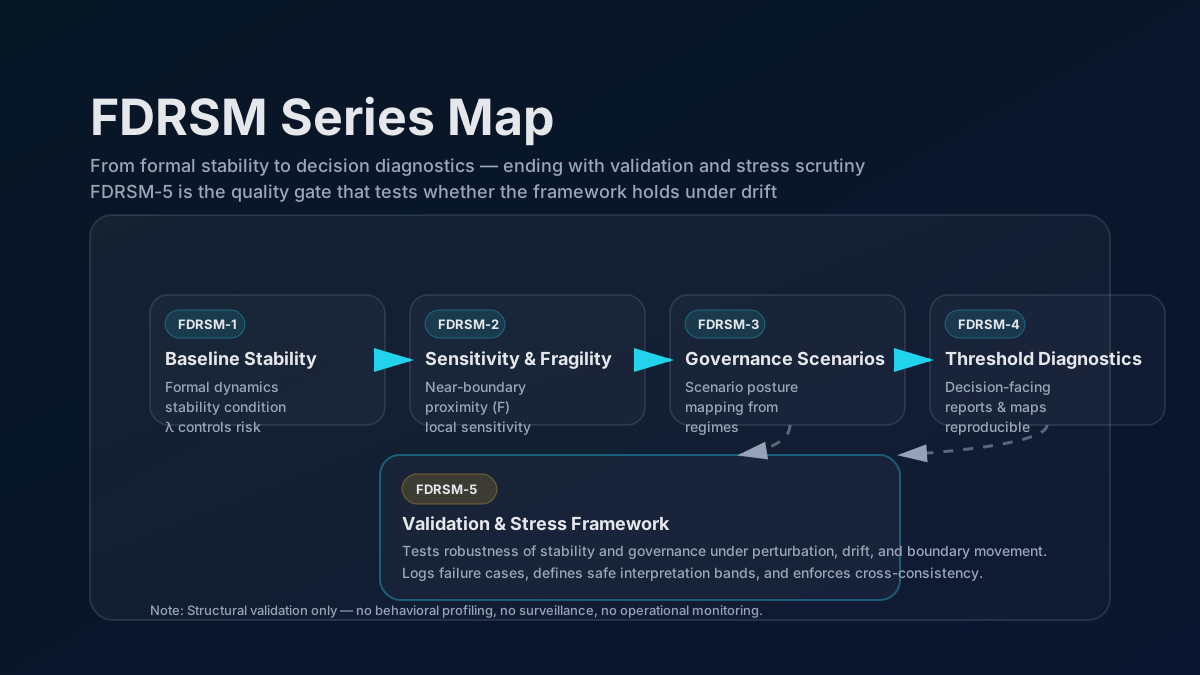
FDRSM-5 acts as a meta-layer: it tests robustness, maps failure cases, and defines safe interpretation zones.
Position in the FDRSM Series
1
FDRSM-1
Baseline stability model
2
FDRSM-2
Sensitivity & fragility near boundary
3
FDRSM-3
Governance scenario interpretation
4
FDRSM-4
Threshold engine + reproducible reports
5
FDRSM-5
Validation & stress analysis (this Space)
Validation Axes
1) Parameter Stress Tests
Controlled perturbations of D, k, and coefficients (α, β) to measure regime switching,
fragility escalation, and decision instability.
2) Robustness Bands
Identify zones where regime classification and governance posture remain invariant under noise.
These bands define safe interpretation regions.
3) Boundary Failure Cases
Detect edge cases where mathematics says “stable” but governance becomes unsafe
(overreach / underreach risk).
4) Cross-Consistency Checks
Verify that FDRSM-3 scenario mappings and FDRSM-4 threshold decisions remain logically consistent under stress.
Robustness Zones (Conceptual)
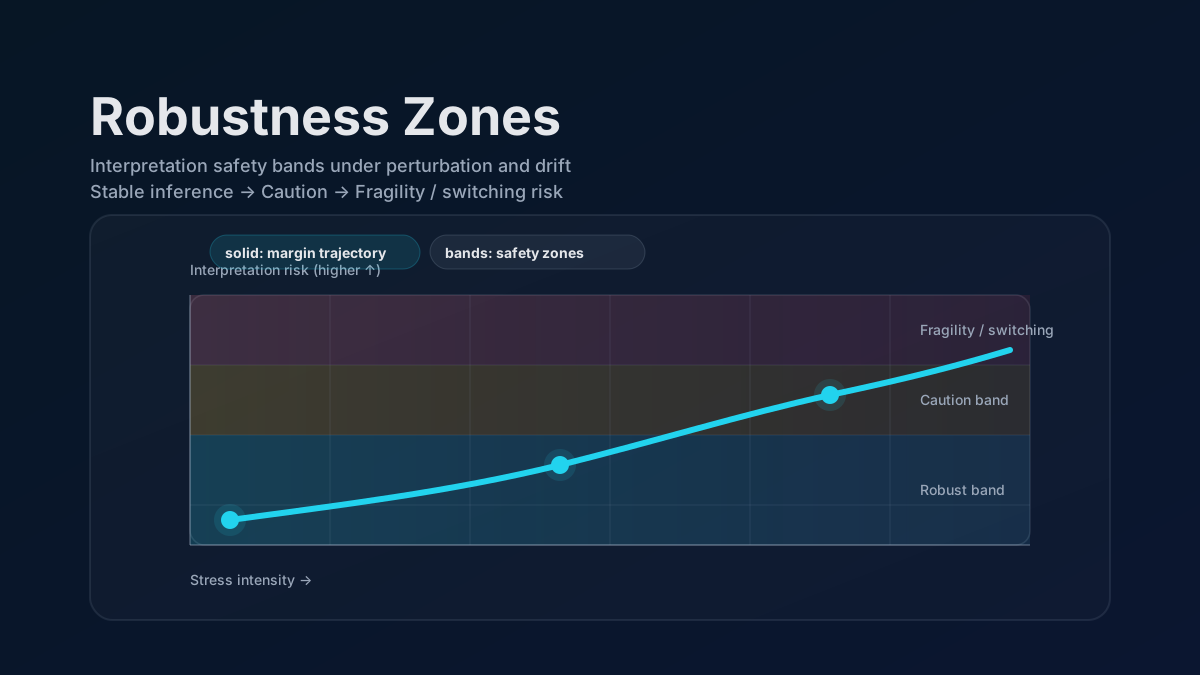
The goal is to distinguish: robust stability, fragile stability, near-boundary hazard, and unstable escalation zones.
Stress-Test Plan (Ready-to-use)
These tables are designed to be copied as appendices into a paper. No code is required to understand them.
| Test Family | Perturbation | Range | Expected Readout | Decision Risk |
|---|---|---|---|---|
| T1 — Symmetric Noise | D and k | ±10%, ±25% | Regime flip count; fragility drift | Hidden instability if near boundary |
| T2 — Asymmetric Shock | D↑, k fixed | +15% to +50% | Time-to-flip; robustness margin erosion | Underreach if posture unchanged |
| T3 — Over-control | k↑ above boundary | +25% to +150% | Stable regime but proportionality check | Overreach risk despite stability |
| T4 — Boundary Drift | k* drift | slow drift + bursts | Near-boundary time proportion | Frequent oscillation between postures |
| T5 — Coefficient Uncertainty | α, β uncertainty | ±5% to ±30% | Confidence bands for λ and Δ | False certainty in governance outputs |
Boundary Drift Illustration
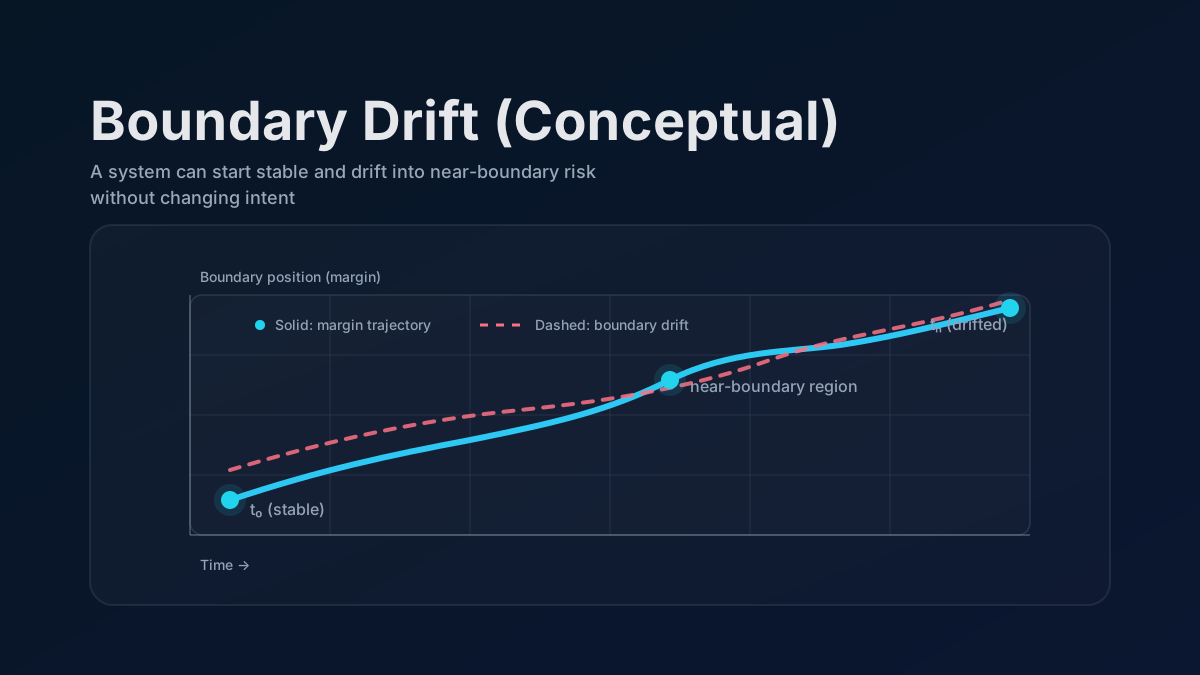
A regime can appear stable at t₀, but drift can push the system into near-boundary hazard without changing intent.
Planned Artifacts
Stress-Test Tables
Paper-ready tables, structured like evaluation appendices.
Failure Case Catalog
Named cases: when “stable” becomes governance-unsafe.
Reproducibility Notes
Assumptions, limits, versioning, and citation guidance.
Robustness Diagrams
Zones and thresholds mapped as interpretable visuals.